
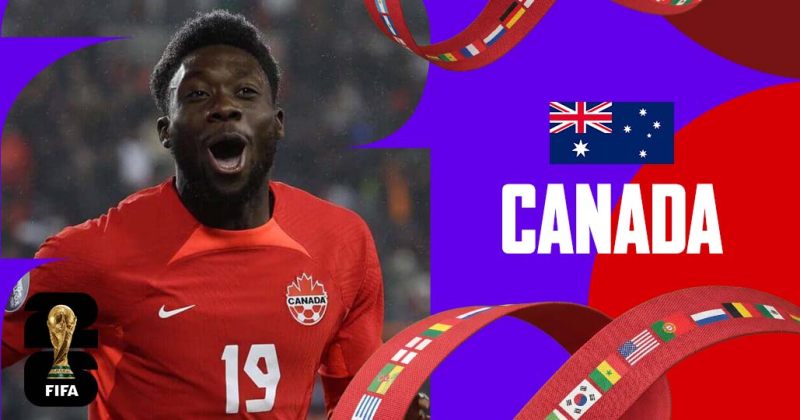
As one of the co-hosts of the 2026 World Cup, the Canadian men's national team is preparing for just its third World Cup appearance in program history. After a 36-year drought (1986-2022), this North American rising power, armed with a "golden generation," is hoping to rewrite its winless World Cup record on home soil.
Canada's soccer history is far from illustrious. In 1986 in Mexico, they lost all three group matches without scoring a single goal. In 2022 in Qatar, they were again eliminated in the group stage, but Alphonso Davies scored the country's first-ever World Cup goal — a moment that marked the beginning of a resurgence. In recent years, with a wave of players moving to European leagues, Canadian soccer has skyrocketed. Once languishing in the FIFA rankings, they now consistently sit inside the top 40, having shed their "minnow" status to become a force to be reckoned with.
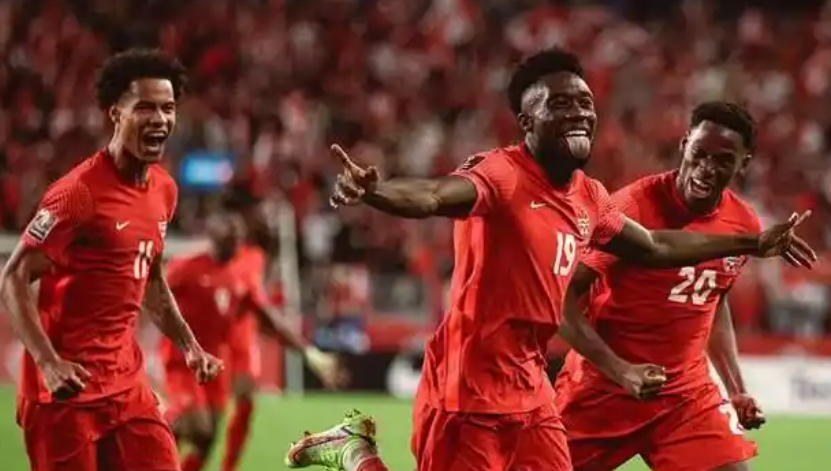
Thanks to its status as a co-host, Canada automatically qualified for this World Cup, giving the team ample time to refine tactics and prepare for its third finals appearance.
From a personnel standpoint, Canada's greatest asset is its speed. The two wings form arguably the strongest wide duo in North America: On the left is Alphonso Davies — a world-class, two-way wide player who is pushed into attack for the national team and serves as a genuine game-breaking "X-factor." On the right is Tajon Buchanan, who has been in excellent form this season for Spanish La Liga side Villarreal.

Up front is Canada's all-time leading scorer, Jonathan David, though his form has noticeably declined. Fortunately, Buchanan has been red-hot, emerging as the team's most consistent attacking threat.
However, despite possessing two explosive wide stars, Canada's midfield still lacks a traditional elite playmaker — a No. 10. When facing opponents of similar quality or a packed defense, how the "Maple Leafs" create chances creatively could be their biggest tactical challenge.

In Group B, Canada's overall strength is slightly higher than Bosnia and Herzegovina and Qatar, but clearly inferior to Switzerland. Therefore, Canada's objective should be to "compete for second place" — go all out against Bosnia and Qatar, then aim to at least avoid defeat against Switzerland, targeting four or five points to secure a direct knockout-stage berth.
All in all, this is a team on the rise. No matter how far they go, the 2026 World Cup will serve as the ceremony where Canadian football truly sheds its "perennial also-ran" label.

 Canada's lineup looks good. I'm looking forward to their outstanding performance.
 0
0 0
0 0
0 0
0 0
0 0
0 0
0 000
000